


California Department of Pesticide Regulation (CDPR)
California Pest Control Licensing
Choose your courses:
Looking to renew your license? We’ve got you covered!
Browse the state-approved bundles and individual courses below.
Individual Courses

General Pest Control (CA-DPR) (OLD)
The General Pest Management Exam is a comprehensive test that covers the identification, biology, and management of various pests, emphasizing the use of IPM and alternative control methods. It also covers unique cases and preventive measures for controlling pests in various settings.
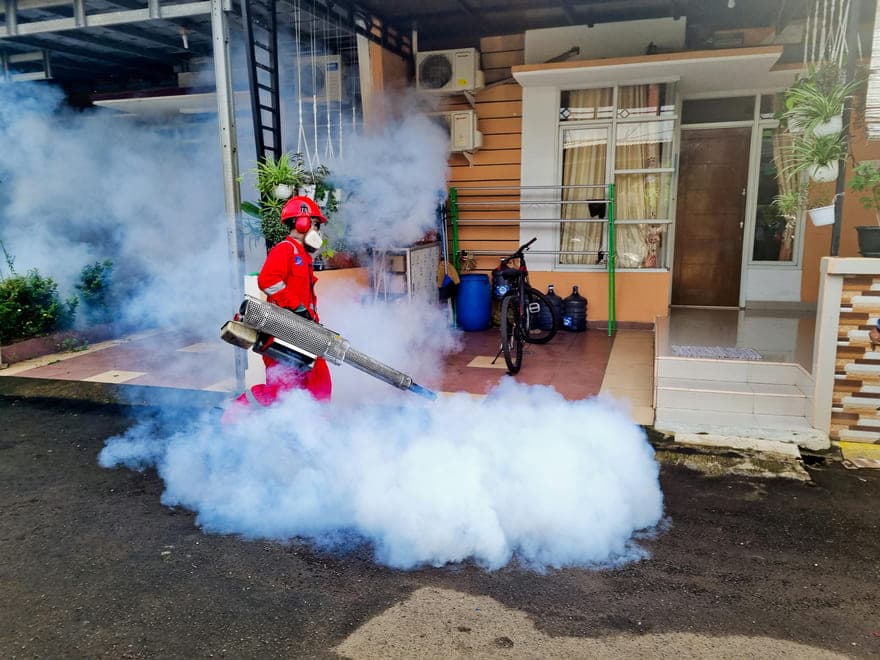
Technical Branch 1 (CA-DPR) (OLD)
This exam covers Bed Bugs and Drywood Termites and covers the identification, life cycle, damage, management, detection, prevention, and exposure assessment of these pests. Specifically, it tests knowledge of commercially available options, nonchemical methods, associated health problems, and personal protective equipment. The exam also covers the use of insecticides, do-it-yourself treatments for bed bugs, and long-term preventive treatments for drywood termites. Additionally, it also covers factors defining exposure scenarios, environmental concentrations and residue, and various types of exposure assessment for sulfuryl fluoride.
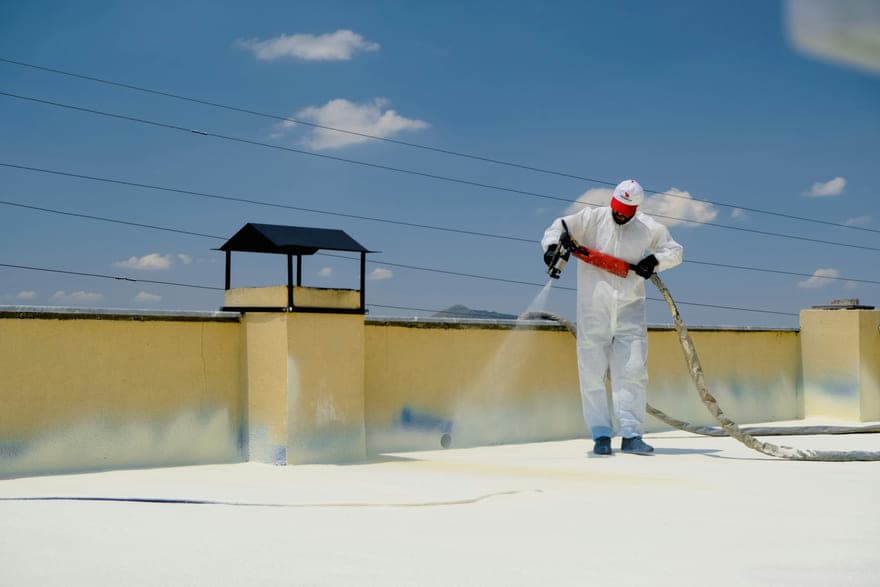
Technical Branch 2 (CA-DPR) (OLD)
The exam covering Cockroaches, Moths, and Yellowjackets will test your knowledge of how to identify, manage, and prevent infestations of these pests. You'll be tested on the different species of cockroaches, moths, and yellowjackets, their life cycles, and the damage they can cause. You'll also be tested on management techniques, like monitoring, sanitation, exclusion, chemical control methods, and follow-up procedures. The exam will also cover special situations, such as wool rugs and carpets, fur, and household furnishings, and the different management techniques that can be used to control infestations in these areas. Overall, the exam will focus on practical knowledge and skills related to pest management and control, and how to apply this knowledge to real-world situations.
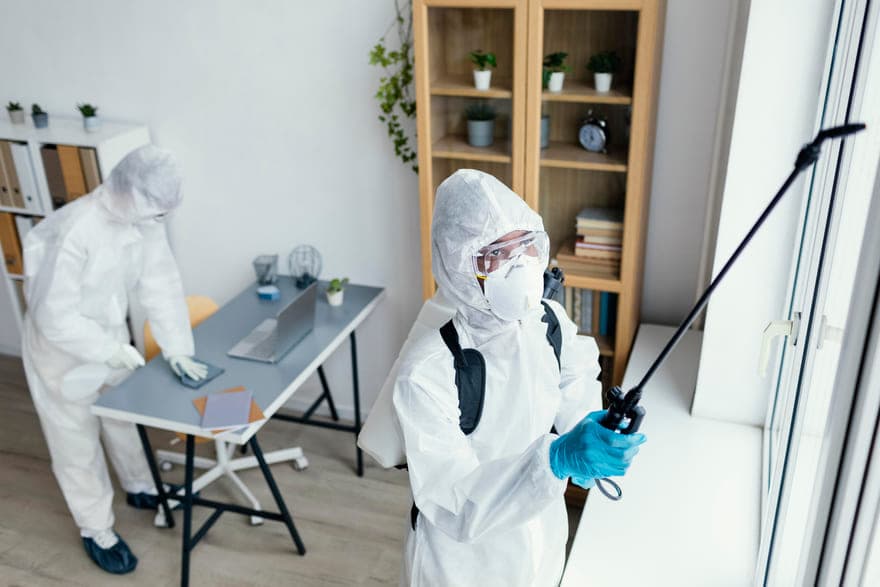
General Pest Control (CDPR) - 4 Hours
Integrated Pest Management (CDPR) - 2 Hours
Integrated Pest Management (CDPR) - 4 Hours
Pest Application and Use (CDPR) - 6 Hours
Rules and Regulations (CDPR) - 8 Hours
Technical Branch #1: Fumigation (CDPR) - 4 Hours
Technical Branch #2: General Pest (CDPR) - 4 Hours
Technical Branch #3: Wood-Destroying Organisms (CDPR) - 4 Hours
Pest control licensing in California
Renewing a pesticide use or advising credential in California means renewing with the Department of Pesticide Regulation. CDPR licenses the Qualified Applicator License (QAL), the Qualified Applicator Certificate (QAC) and the Pest Control Adviser (PCA) license, on a two-year cycle: renewal applications must be postmarked on or before December 31, and the license must be renewed by January 1 to keep working. LearnPest offers state-approved CDPR continuing education and reports your completions for you.
How to renew your California pest control license
Renewal deadline · Every 2 years — CDPR renewal applications must be postmarked on or before December 31, and the license must be renewed by January 1 to keep working
Watch for the renewal packet CDPR mails in August, or download the Individual License/Certificate Renewal Application Packet from cdpr.ca.gov.
Complete all DPR-approved CE hours inside the valid period printed on your license or certificate — there is no grace period, and extra hours do not carry over to the next cycle.
Fill in the LIC-141 renewal application and the Continuing Education Records Renewal Summary on page 2, which CDPR now requires with every renewal.
Enclose the renewal fee — $270 for a QAL, $140 for a QAC, $320 for a PCA — payable to “Cashier, Department of Pesticide Regulation”.
Mail it to Department of Pesticide Regulation, Attn: Cashier MS-4A, PO Box 4015, Sacramento, CA 95812-4015. CDPR recommends submitting by October 1 so the new license arrives before January 1.
Allow up to 60 days for processing. An application postmarked after December 31 is charged a late penalty of 50% of the renewal fee.
Continuing education requirements
California requires continuing education hours by license type. Our bundles above are sized to satisfy these in a single sitting.
| License type | Required CEUs | Notes |
|---|---|---|
| Qualified Applicator License (QAL) — first renewal | 10 total hours | 2 of the 10 must be Laws & Regulations. Applies when the first license period runs 12–20 months; a first period under 12 months requires no hours. |
| Qualified Applicator License (QAL) — every renewal after the first | 20 total hours | 4 of the 20 must be Laws & Regulations, earned across the 21–24-month license period. |
| Qualified Applicator Certificate (QAC) — first renewal | 10 total hours | 2 of the 10 must be Laws & Regulations. Applies when the first certificate period runs 12–20 months. |
| Qualified Applicator Certificate (QAC) — every renewal after the first | 20 total hours | 4 of the 20 must be Laws & Regulations, earned across the 21–24-month certificate period. |
| Pest Control Adviser (PCA) — first renewal | 20 total hours | 2 of the 20 must be Laws & Regulations, for a first license period of 12–20 months. |
| Pest Control Adviser (PCA) — every renewal after the first | 40 total hours | 4 of the 40 must be Laws & Regulations, earned across the 21–24-month license period. |
| QAL or QAC holding only category H | 4 total hours | 2 Laws & Regulations after the first renewal; 2 total hours with 1 Laws hour at the first renewal. |
| QAC holding only subcategory Q | 8 total hours | 2 Laws & Regulations after the first renewal; 4 total hours with 1 Laws hour at the first renewal. |
| Pest Control Aircraft Pilot Certificate | 20 total hours | 4 Laws & Regulations and 4 Aerial after the first renewal; 10 total with 2 Laws and 2 Aerial at the first renewal. |
California licensing fees
Direct from the state agency's published fee schedule. Use these to budget renewals and certification.
CDPR license renewal fees (2-year period)
- Agricultural Pest Control Adviser (PCA)$320 (Late Fee $160)
- Qualified Applicator License (QAL)$270 (Late Fee $135)
- Qualified Applicator Certificate (QAC)$140 (Late Fee $70)
- Pest Control Dealer Designated Agent (DDA)$110 (Late Fee $55)
- Pest Control Aircraft Pilot Certificate (manned or unmanned)$200 (Late Fee $100)
Source: www.cdpr.ca.gov/wp-content/uploads/2025/03/ce_hours.pdf, www.cdpr.ca.gov/wp-content/uploads/2025/07/individual_renewal_packet.pdf

Just getting started?
Try Scout, our AI tutor.
2 day exam ready and
92% first time pass rate
$149
30 days access
Just getting started?
Try Scout, our AI tutor.
2 day exam ready and
92% first time pass rate
$149
30 days access
Don’t just take our word for it:

Mission Pest Control
“LearnPest has been a super useful tool for making license renewal a breeze. I love being able to just select the bundle for my license type with 1 click and always be sure I'm getting all the needed CEU's for my renewals! Super Easy!”

Moxie Pest Control
“So grateful I found LearnPest for my CEU hours. Not only for me but for my team. I've gone through multiple sites and this one by far has been the best and most convenient for me and my pest control company. Easy to use and great quiz questions. I will definitely be using them from now on.”
Frequently Asked Questions
How long is the pest control license valid in California?
California Department of Pesticide Regulation (CDPR) licenses and certificates — the Qualified Applicator License (QAL), the Qualified Applicator Certificate (QAC), and the Pest Control Adviser (PCA) license — run on a two-year cycle, and the exact valid period is printed on your license or certificate. Renewal applications must be postmarked on or before December 31, and the license must be renewed by January 1 to keep working. LearnPest tracks that California deadline for you, stores every CDPR CEU certificate you earn, and reports your completions to the Department of Pesticide Regulation.
When should I submit my CDPR renewal application?
Send it early. California Department of Pesticide Regulation (CDPR) renewal applications must be postmarked on or before December 31, and CDPR recommends submitting by October 1 because processing takes up to 60 days — your license must be renewed by January 1 to keep working legally. An application postmarked after December 31 is charged a late penalty of 50% of the renewal fee. All CE hours have to be completed inside the valid period printed on your license; CDPR gives no grace period and hours do not carry over. LearnPest reminds you before the California deadline and reports your completed CEUs for you.
Do you need a license for pest control in California?
Yes. Applying, selling, or advising on pesticides for hire in California requires a credential from the California Department of Pesticide Regulation (CDPR) — the Qualified Applicator License (QAL), the Qualified Applicator Certificate (QAC), or the Pest Control Adviser (PCA) license. LearnPest sells state-approved California CEU courses for renewing a CDPR credential and reports your completions to the department.
Which entities regulate pest control in California?
Two separate California agencies do, and they are peers rather than one inside the other. The Structural Pest Control Board (SPCB), a board within the California Department of Consumer Affairs, licenses and regulates structural pest control. The California Department of Pesticide Regulation (CDPR), a department within the California Environmental Protection Agency, licenses pesticide use, sales, and advising — QAL, QAC, and PCA — and regulates pesticide use statewide. You renew with whichever one issued your license, and LearnPest is approved to deliver California continuing education for both.
Who pays for pest control in California?
Generally the landlord is responsible under most lease agreements.
How many continuing education hours does a California QAL holder need to renew?
A California Qualified Applicator License (QAL) is renewed with the California Department of Pesticide Regulation (CDPR), not the Structural Pest Control Board, and CDPR requires 20 continuing education hours for every renewal after the first — 4 of which must be Laws and Regulations — earned inside the 21-to-24-month license period printed on your license. A first renewal covering 12 to 20 months requires 10 hours, 2 of them Laws and Regulations. The 12-hour figure often quoted for California is the Structural Pest Control Board's Applicator requirement and does not apply to a QAL. LearnPest sells state-approved California CEU courses and bundles for both agencies and reports your completions for you.
What is the difference between the SPCB and CDPR in California?
California splits pest control oversight between two peer agencies. The Structural Pest Control Board (SPCB) is a board within the California Department of Consumer Affairs and licenses structural pest control — Branch 1 (fumigation), Branch 2 (general household pests), and Branch 3 (wood-destroying organisms) Applicators, Field Representatives, and Operators. The California Department of Pesticide Regulation (CDPR) is a separate department within the California Environmental Protection Agency and licenses pesticide use and advising credentials — the Qualified Applicator License (QAL), Qualified Applicator Certificate (QAC), and Pest Control Adviser (PCA). Neither is a division of the other, and a California licensee renews with whichever agency issued their license. LearnPest carries state-approved California continuing education for both.
What is the difference between a QAL and a QAC in California?
Both the Qualified Applicator License (QAL) and the Qualified Applicator Certificate (QAC) are issued by the California Department of Pesticide Regulation (CDPR), and both carry the same continuing education requirement — 20 hours per renewal after the first, 4 of them Laws and Regulations. The difference is scope: a QAL holder can serve as the qualified person for a California pest control business, while a QAC holder can apply or supervise pesticide applications but cannot act as the business's qualifying supervisor. LearnPest's California CEU bundles count toward either credential and are reported to CDPR on your behalf.